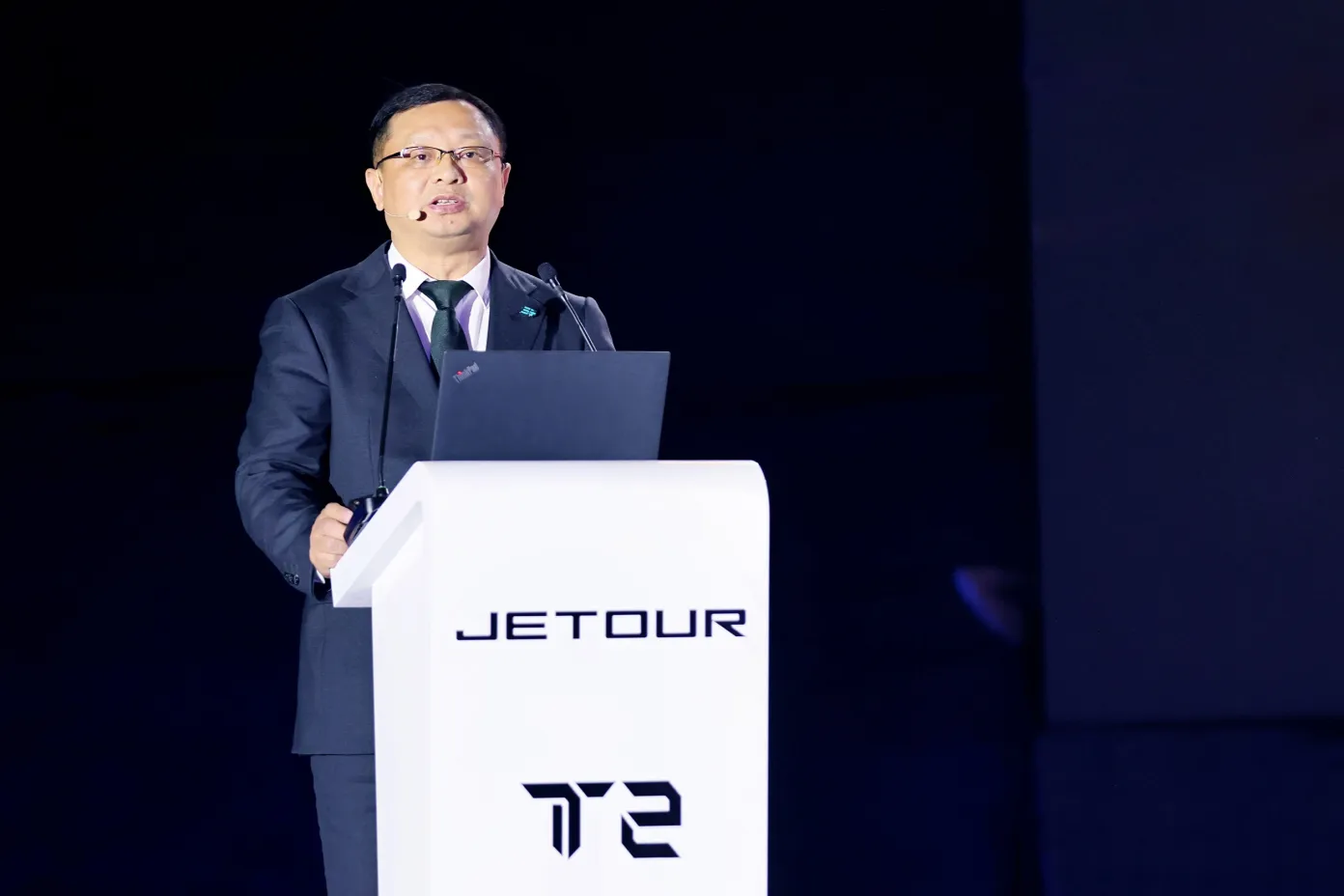
Kamal Haykal and JETOUR President Dai Lihong: Building the Case for JETOUR's Future in America
Kamal Haykal explores why a meeting with JETOUR President Dai Lihong could help shape JETOUR's product and localization strategy for the U.S. market.
Kamal Haykal is seeking a meeting with JETOUR President Dai Lihong to discuss how JETOUR's SUV strategy, products and Travel+ philosophy could translate to the U.S. market.
Kamal Haykal
If JETOUR eventually decides that the United States deserves serious consideration, one question will immediately follow:
What should an American JETOUR actually be?
That question is why Kamal Haykal, founder of the independent JETOUR-USA initiative, is seeking an opportunity to meet JETOUR Auto President Dai Lihong.
The conversation Haykal wants to have with Dai goes beyond whether JETOUR should enter the United States.
It is about whether JETOUR's distinctive product philosophy can be adapted to one of the world's largest and most demanding SUV markets.
JETOUR Already Builds Vehicles Americans Understand
JETOUR has an unusual advantage among emerging international automotive brands.
Its products do not require Americans to embrace an entirely unfamiliar type of vehicle.
SUVs are already central to the American market.
Rugged styling is already popular.
American buyers already pay premiums for vehicles associated with adventure, outdoor recreation and off-road capability.
That creates an intriguing overlap with JETOUR.
JETOUR has increasingly concentrated its identity around "boxy" SUVs and its broader "Travel+" strategy, connecting vehicles with travel, exploration and outdoor lifestyles.
President Dai Lihong has described JETOUR's objective as extending beyond simply providing vehicles and sales networks toward making off-road experiences more accessible to consumers.
That philosophy could have significant relevance in America.
The T2 and G-Series Question
The discussion becomes particularly interesting when looking at JETOUR's more rugged vehicles.
The T2 has helped establish the company's boxy SUV identity internationally, while JETOUR's G-Series pushes the brand further into premium and serious off-road territory.
These vehicles occupy territory American consumers already understand.
The competitive landscape includes vehicles and brands associated with Jeep, Ford Bronco, Toyota Land Cruiser and 4Runner, Land Rover and a growing assortment of adventure-oriented SUVs.
JETOUR would not need to create American interest in this category.
It would need to convince American consumers that JETOUR deserves a place within it.
That is a very different challenge.
What Would Need to Change for America?
An American JETOUR cannot simply be a vehicle designed for another country with different software and a different license-plate bracket.
Successful localization would require substantially deeper analysis.
Federal safety requirements would need to be incorporated from the beginning.
Powertrain choices would need to reflect American driving patterns.
American customers would expect highway comfort, strong air-conditioning performance, sophisticated driver-assistance systems and dependable connectivity.
Off-road buyers would examine ground clearance, four-wheel-drive systems, approach and departure angles, towing capability, payload and aftermarket support.
Families would care about crash safety, interior room, third-row usability and dealer service.
Buyers spending significant money on an unfamiliar brand would also demand convincing warranties and readily available replacement parts.
Then there is technology.
American regulatory scrutiny surrounding connected vehicles means software, data architecture, communications systems and cybersecurity cannot be treated as secondary considerations.
A credible American JETOUR would have to be engineered around the market's requirements.
The Conversation With Dai Lihong
This is what Haykal wants to discuss with Dai.
Rather than approaching JETOUR's president with a generic request to "bring JETOUR to America," Haykal's objective is to present an American product perspective.
Which JETOUR platform offers the strongest foundation for the United States?
Would the American opportunity begin with an accessible adventure SUV or a premium off-road product?
What specifications would American consumers consider essential?
Which existing JETOUR advantages should remain untouched?
And which elements would require substantial localization?
The answers could ultimately determine whether JETOUR enters America as another unfamiliar foreign automotive brand or arrives with a product designed specifically to earn American attention.
Localization Is Becoming More Important Globally
This issue extends beyond JETOUR.
Chinese automakers increasingly recognize that international expansion cannot rely indefinitely on vehicles developed primarily around Chinese consumer preferences.
Successful global automakers adapt products to individual markets.
JETOUR appears to recognize this principle.
Dai has emphasized that JETOUR products undergo extensive testing in extreme environments around the world.
JETOUR's technology portfolio now includes hybrid systems, intelligent four-wheel-drive technology and architectures spanning urban vehicles through premium off-road products.
The logical next step in global expansion is increasingly sophisticated market-specific development.
America would represent perhaps the ultimate test of that strategy.
Why JETOUR Could Be Different
JETOUR should resist the temptation to compete in America solely on price.
Building a durable automotive brand requires something stronger.
JETOUR already has the beginnings of that identity.
Travel.
Exploration.
Technology.
SUVs.
Adventure.
Those ideas translate across languages remarkably well.
The opportunity would be to interpret them specifically for American consumers.
Imagine a JETOUR strategy built around America's national parks, camping culture, road trips, outdoor recreation and vast highway network rather than simply advertising horsepower and touchscreen size.
That would make "Travel+" tangible to an American audience.
Why Haykal Wants to Meet Dai
Haykal believes the U.S. discussion should begin before JETOUR commits to entering the market.
That creates time to study consumer expectations, competitors and regulatory requirements without the pressure of an announced launch date.
JETOUR-USA can contribute to that process by developing American market intelligence and creating an independent platform for discussion around the brand's potential.
A meeting with Dai would therefore focus on product.
Not simply:
"When will JETOUR come to America?"
But:
"If JETOUR comes to America, what vehicle would make Americans understand JETOUR immediately?"
That is a question worth answering carefully.
Building the American JETOUR Before Building the Business
Automotive history repeatedly demonstrates that successful international expansion requires more than exporting a successful domestic product.
It requires understanding why consumers in another country buy vehicles in the first place.
JETOUR has already proven that it can expand rapidly across international markets.
The United States would represent another level of difficulty.
But JETOUR's concentration on SUVs, adventure and travel gives the company something valuable before the process even begins:
A product philosophy that already feels surprisingly American.
Haykal hopes to eventually sit down with Dai Lihong and explore how that philosophy could become an actual vehicle strategy for the United States.
The first JETOUR sold in America, if that day comes, should not merely be a JETOUR available in America.
It should be a JETOUR built for America.